
Supporting our communities beyond the workplace
Volunteers' week
At Price Bailey, many of our people work closely with schools, academies, charities and not-for-profit organisations every day. For some of our people, that involvement goes beyond their professional roles.
To celebrate volunteers’ week, we spoke to colleagues from across our firm about their experiences as trustees, governors and volunteers within their local communities.
We hope these conversations not only shine a light on the people behind our firm, but also demonstrate the understanding and first-hand insight we bring when working with trustees, schools and charities, through experiences that reflect the realities and responsibilities faced.
Bethan Vaghela, Senior Manager, Audit & Assurance
School governor, Scout trustee and football coach

Can you tell us about the volunteer roles you do?
I am Chair of a Local Governing Body for Bury C of E Primary School in the Diocese of Ely Multi Academy Trust (now Grace Schools). I am also a Trustee and Treasurer for a local scouting group, and I coach an Under-10 boys’ football team.
What motivated you to take on these roles?
Making a difference. All of the roles involve actively investing in children’s futures and giving them the best opportunities possible.
What does each of the roles involve?
For the Chair role, I attend and chair four meetings a year. I also act as a critical friend to the Headteacher and Assistant Headteacher, supporting them on school matters. I also get involved with recruitment, school trips and OFSTED inspections.
For the scouting role, I attend regular trustee meetings and contribute to ensuring our risks and strategies are appropriate. As Treasurer, I manage the finances for Beavers and Cubs, including subscriptions, Gift Aid and invoices.
As a football coach, I run a training session every Thursday and we play league matches on Saturdays. Alongside that, I manage the FA administration and plan training sessions and matches.
Which role do you find most challenging?
Football coaching – trying to keep a group of 10-year-old boys engaged and listening is incredibly tough!
How does your professional experience support your volunteer roles?
For my governor role, I am used to evaluating controls, risks and compliance, and I understand how to challenge constructively whilst maintaining independence.
For my scouting role, I use my accounting skills to prepare accounts and ensure compliance with reporting requirements. As a football coach, I find my organisational skills help me structure and plan matches and training sessions effectively.
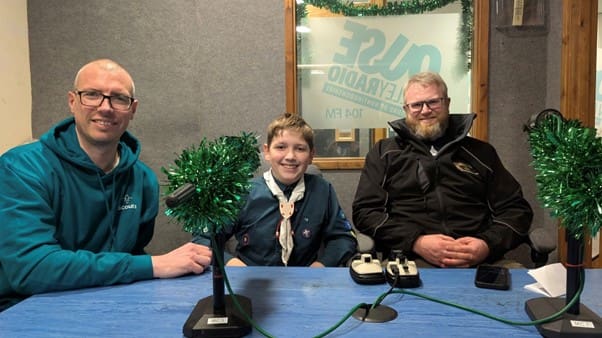
Thomas Birch, Director, Marketing
Chairman of the Board of Trustees, 1st Hunts (Hartford) Scout Group

What does your role as Chairman of the Board of Trustees involve?
My role involves leading the Board of Trustees to ensure we operate in a safe and legal manner, in line with the Scout Association’s Policy, Organisation and Rules (POR). My responsibility is ultimately overseeing the group’s governance behind the scenes and supporting the Group Lead Volunteer and the other leaders to deliver scouting to young people in our community.
What motivated you to become a trustee?
After my boys joined Beavers and Cubs, I wanted to support the other volunteers giving up their time. Due to work and other constraints, I couldn’t easily commit to helping lead sessions on a Thursday every week, so I decided to become a trustee and help behind the scenes.
What does the role involve on a practical level?
My practical tasks include hosting and chairing regular board meetings, the Group Scout Council meetings and our AGM, ensuring other trustees are upholding their responsibilities in relation to safeguarding, financial matters and general administration.
The role also involves promoting scouting in the local community and supporting our Group Lead Volunteer and other leaders by ensuring we have adequate resources, training and looking after their wellbeing.
What do you find most rewarding about being a trustee?
Knowing that I am giving something back to an organisation which is run entirely by volunteers at a local level is incredibly fulfilling. You don’t have to be on the front line to make a difference, and while your contributions are not as visible, they are no less important to the success of the organisation.
What skills or qualities make an effective trustee?
I think anyone can be a good trustee, and organisations such as Scouts provide a lot of training, online resources and support. Many trustees have practical skills from their work, which can be beneficial to the organisation. Ultimately, you just need to be organised, passionate and happy to work as part of a team.
What advice would you give to someone considering becoming a trustee?
You don’t need a strong background in scouting, and it is beneficial to have a diverse range of perspectives on a trustee board. While becoming a trustee can seem daunting, particularly when you look at your legal responsibilities, it is very rewarding and not difficult to do the right thing.
Many organisations, such as the Scouts, can offer insurance against others’ negligence, minimising your exposure; however, this doesn’t cover you from being negligent yourself. So don’t go into it blind. Speak to existing trustees and take advantage of any training and support, whether from your own organisation or external charity and not-for-profit advisers.
Jack Eley, Trainee, Audit & Assurance
Trustee at Northgate Primary School

Can you tell us about your role as a trustee?
I’m a trustee at Northgate Primary School, which is an academy but not part of a multi-academy trust (MAT). It used to be a local authority primary school. I’m relatively new to the role, so I haven’t yet had a significant impact, but I’m starting to get involved.
What motivated you to become a trustee?
A big driver for me was wanting to make a difference. Growing up, I saw friends who didn’t have the best outcomes, and I didn’t have the best experience at primary school myself. That made me want to give something back and help improve things for others.
The idea originally came up when I was working on academy audits last year. That experience highlighted how I could contribute in a governance role.
Did you have any previous experience working with young people?
Yes, during secondary school I worked as a mentor to a Year 7 student who was struggling. Seeing the positive change that support can bring made me want to do more.
School is where children spend much of their time growing up, so it’s really important they feel supported and comfortable.
What does the role involve on a practical level?
We have one meeting each half term. I’m part of both the audit committee and the finance committee. I’ve also taken on responsibility for subject areas, including personal health and computing.
How did you initially get involved in the role?
I submitted an initial letter outlining my skills and experience. Through my work, I’ve carried out a lot of academy audits, so I have a strong understanding of systems and controls, which has been helpful.
What has your onboarding experience been like so far?
I’ve met with the Chair of the Local Governing Body and the Headteacher, and I’ve had follow-up discussions with the Chair. It’s been helpful in understanding how the school operates and where I can add value.
How does your professional experience support your role as a trustee?
My background in audit gives me useful insight, particularly in financial oversight and governance. It allows me to act as a “critical friend” – supporting the school while also providing challenge and holding the Headteacher to account where appropriate.
Matthew Hector, Outsourcing, Senior Manager
Trustee at Home-Start Norfolk

Can you tell us about Home-Start Norfolk?
I am a Trustee at Home-Start Norfolk, which is part of a UK-wide organisation that works with families who have children between the ages of zero and five. Families can either be referred to the service or self-refer.
What types of challenges do the families you support face?
Many of the families are struggling, particularly with mental health issues. Referrals often come through organisations like the NHS and local authorities, which helps identify families who may need extra support.
What does the support from Home-Start look like?
Home-Start assigns volunteers to work with families for a certain period of time, depending on the complexity of their situation. The support is practical, flexible and tailored to individual needs.
Can you give examples of the support provided?
Support can range from day-to-day help such as preparing meals and general parenting support, through to taking children to school or helping with drop-offs. It’s really about providing hands-on support to make things more manageable for families.
What does your role as trustee involve?
We have regular meetings throughout the year. There is a really good mix of trustees on the board who are very efficient and have strong documented processes in place. Good information is brought to meetings, which helps us make informed decisions and support the charity effectively.
We always recommend that you seek advice from a suitably qualified adviser before taking any action. The information on this page is intended as a general guide only. While we work to keep our content accurate and up to date, we cannot guarantee that it reflects the position at the time you are reading it. No responsibility for loss occasioned by any person acting or refraining from action as a result of this material can be accepted by the authors or the firm. For more information on our editorial process, click here.
We can help
Contact us today to find out more about how we can help you