
Repeat Prescription
Key primary care updates for October 2026, including GP locum reimbursement, patient list cleansing, same-day access, the Health Bill and Autumn Budget.

Accounting and advisory support for dental practice owners and associates, helping you navigate NHS and private pressures, improve margins and plan for future growth.
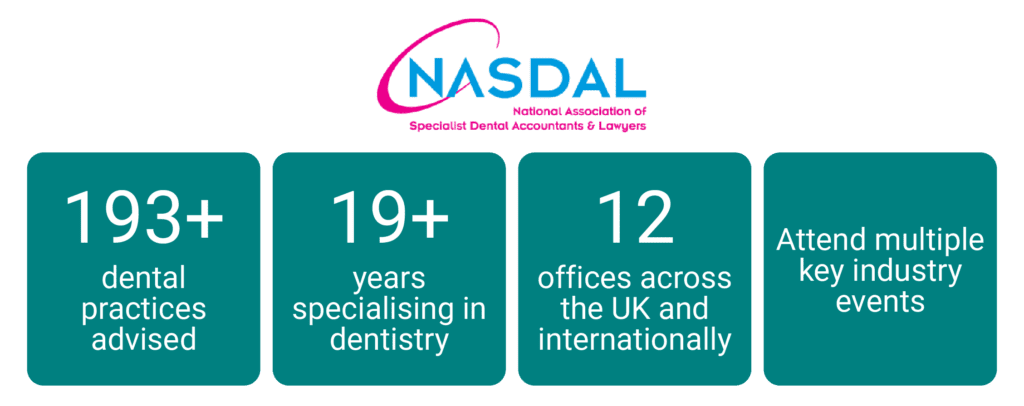
Whether you’re an NHS or private dental practice, a principal owner or self-employed associate, our specialist financial advisers and compliance partners understand the unique concerns of your industry, leaving you free to concentrate on the things that really matter to your patients.
Running a dental practice in 2026 means operating in an increasingly complex and changing environment. NHS contract developments are reshaping how income is generated, while greater scrutiny around pricing and patient communication is placing new pressure on private practices. At the same time, practices are balancing rising costs such as laboratories, materials and technology with ongoing recruitment challenges.
Despite this, there are clear opportunities for practices that adapt. Growth in private treatments and investment in modern clinical technologies can support stronger margins, but only where performance is closely managed. In this environment, access to specialist financial insight is essential to help practices respond quickly, maintain profitability and plan for long term success.
Whether you run a single-chair private clinic, an NHS-focused practice, or a growing multi-site group, owning a dental practice today involves far more than delivering patient care. Each model brings different financial pressures, from NHS contract performance and UDA targets to private fee structuring and investment in new clinical technology.
Dental businesses operate very differently from traditional commercial models. Revenue is often split between NHS contracts, private income streams and associate arrangements, while profitability depends on tight control of staffing, laboratory costs and chair utilisation.
In 2026, practice owners are also facing continued scrutiny around pricing transparency, increasing operational costs, and ongoing recruitment challenges.
Our role goes beyond compliance. Alongside managing accounts, tax, VAT, payroll and regulatory requirements, we act as a strategic advisor to your practice, helping you to:
This ensures you are not only compliant, but operating a financially strong and future-ready practice.
As a self-employed associate or clinician working across practices, your income structure and financial responsibilities are fundamentally different from a salaried role. Earnings may vary depending on fee splits, private vs NHS work, and performance-based incentives.
Unlike traditional employment models, associates must manage their own tax position, cash flow, and long-term financial planning, often with limited visibility over future earnings or pension implications.
We support associates throughout their careers, not just with compliance, but with forward-looking advice to help you:
By giving you clarity over your finances, we help you stay focused on developing your clinical career.
Starting your career in dentistry comes with a steep financial learning curve. Moving from employed training roles into self-employment or associate work introduces new responsibilities around tax, record keeping and financial planning.
Unlike more traditional career paths, dental professionals often become self-employed early on, meaning:
You are responsible for your own tax returns and payments
Pension arrangements can become more complex, particularly with NHS schemes
Income can vary significantly depending on your first roles and practice structure
We provide clear, practical support to help you navigate this transition with confidence, including:
As your career develops, we continue that relationship, supporting your progression into higher earnings, new roles or eventually ownership.
Would you like to know more about how we could help you or your business? Speak to one of specialist dental accountants today.
Dental practices operate within a complex financial and regulatory environment that differs significantly from other businesses. Revenue structures vary across NHS contracts, private fee income and associate arrangements, each with different cash flow and reporting implications.
Practices must also navigate:
Alongside this, day-to-day performance depends on controlling key cost pressures such as staffing, laboratories and material costs, while maintaining strong utilisation and profitability.
With ongoing recruitment challenges, cost inflation and increasing scrutiny around pricing and patient communication, having sector-specific financial oversight is critical.
Specialist advice ensures your financial management reflects how dental practices actually operate, supporting better performance, stronger margins and informed long-term decisions.
 Holly is a Partner and specialist in the healthcare sector, recognised for her expertise and previously nominated as an AISMA specialist. She has extensive experience supporting SMEs, including sole traders, limited companies and partnerships.
She advises dental clients on areas such as annual accounts, tax compliance, cashflow management and navigating sector-specific changes, including NHS contract updates. Holly is known for delivering practical, tailored advice that reflects the individual needs of each client.

Kirsty is a Manager in Price Bailey’s Business team, specialising in the healthcare sector and working closely with dental practices. She supports clients with both compliance and advisory needs, including year-end accounts, tax compliance, VAT and financial reporting. With a background in outsourced finance, Kirsty often acts as a trusted finance lead, working alongside internal teams or overseeing outsourced functions to ensure accurate reporting and strong financial controls. She provides a consistent point of contact, delivering clear, proactive advice tailored to each client.
Prior to moving into accountancy, Kirsty worked as a qualified dental nurse and later in dental practice management. This gives her a practical understanding of the operational, financial and regulatory challenges faced by dental practices, and allows her to offer relevant, commercially focused advice.

Emma is a Partner in Price Bailey’s Audit and Assurance team, specialising in working with dental practices. She supports clients with audit, financial reporting and compliance, helping ensure their financial information is reliable and robust.
Emma works closely with growing and established dental practices, advising on areas such as revenue recognition, associate arrangements and financial controls. She is particularly focused on helping practices maintain strong processes and meet regulatory requirements.
She is known for taking a practical approach to audit, helping identify issues early and giving clients confidence in their financial reporting as their practice evolves.
Watch our dental specialists answer the questions practice owners and associates ask us most often. Select a question below to play the video.
Whether you’re managing a practice or building your career, our dental specialists can support you with practical, relevant advice.
Contact us today to find out more about how we can help you
Key primary care updates for October 2026, including GP locum reimbursement, patient list cleansing, same-day access, the Health Bill and Autumn Budget.

Price Bailey's dental experts offer a practical guide to help newly self-employed associates understand their tax responsibilities, key deadlines and financial planning considerations from day one.

Our experts discuss the upcoming dental contract changes and CMA review, offering practical advice for professionals in this sector.

With the DDRB uplift being announced for healthcare professionals, we discuss the potential changes and impacts to NHS and private dentists.