
6 interesting women-founded businesses
In honour of International Women’s Day
With International Women’s Day approaching, we are celebrating by taking a closer look at the characteristics of women-founded businesses and then exploring the profiles of six UK businesses founded by women.
Characteristics of women-founded businesses
Current stage of evolution of women-founded businesses based in the UK
Of the 4,444 UK businesses with women-founder teams, just under half of these businesses are in the early start-up, or seed, stage. Only 5% are in a stage of failure (zombie or dead), with a negligible percentage being classed as dead.
Amongst these businesses, there has been 221 exit events, with nearly all of them being acquisitions. The average acquisition price is £72.4m, with a range of £100k to £700m.
Gender balance (% female) of directors and key people for women-founded businesses
*Beauhurst
* Director: Percentages are of 4,044 businesses with available data.
* Key people: Percentages are of 4,372 businesses with available data.
We can see that most of these businesses have women-only teams for both directors (59%) and key people (62%). On the other end of the scale, very few have only male directors (at 5%), and, of the available data, there are no businesses who do not have women in key people positions. In short, businesses with women founder teams seem to be more likely to have a higher percentage of women in key or higher-up roles.
Investment into women-founded businesses over the years
Fundraisings over the past 10 calendar years, for businesses with women founding teams
*Beauhurst
As we have seen with other research areas, 2021 was a good year for investment for women-founded businesses as well, with total fundraising value seeing an increase of 58% from 2020. Since this peak, overall fundraising activity has declined with the past two years showing similar levels of activity.
Company profiles
To showcase the variety and range of businesses being founded by only women-teams, we took a deeper dive, into six stand-out businesses.
1. Garthenor Organic
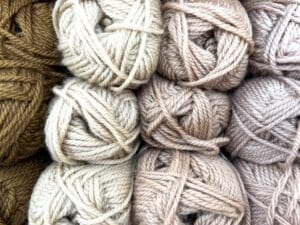
Based in Wales, Garthenor Organic is on a mission to make only 100% certified organic yarn without making any compromises. They were founded by Sally Davies (co-owner and Managing Director) over 25 years ago, who is an experienced knitter, spinner, crocheter, crafter, and a fibre expert. She founded the company with the goal of making great, local organic yarn. At Garthenor Organic, she is in charge of crafting all the blends that become their yarns.
The company started as a small flock of sheep and a local mill, at a time when there were no organic standards for wool yarns. They were convinced that the way in which they spun their yarns, with organic sheep and environmentally friendly as well as traceable spinning was the right way. This led to them joining forces with the Soil Association to write the first organic standards for woollen yarns. They became the first company in the world to produce fully certified organic wool yarns in 2003, and since then everything they produce is certified to Global Organic Textile Standards.
With sustainability at their core, they have made a new pledge to plant one tree for every single skein of yarn they sell, through their partnership with Eden Reforestation. The pledge applies to all the products they sell so that every bag, pair of socks, and mini skein set sold results in a tree being planted. To date, they have planted over 11,000 trees.
Over the course of the past year, they have announced several new product lines and additions to existing ones:
- The Botanical Collection: A limited-edition set of four marbled colourways with each one being inspired by a wild bloom, a hedgerow herb, or simply a beautiful moment in the garden.
- Unruly: A collection born from the mistakes that naturally occur from making everything themselves. The first batch is called Folly, a twist of three plies of Snowdonia Sock in Tomen, a rich mid-grey, and one ply of Preseli in Blazer, a deep navy blue. Folly was created thanks to a misstep at the cone rack. The yarns in this collection will be ‘one-offs’. Once they are sold out, they will not be returning.
- Number 2 Range: Created from a batch of Shetland x Cheviot fleece, four new shades have been added to their existing Number 2 Range. These new shades are oatmeal, snowcap, mist, and granite.
- Fallow: A yarn born from Garthenor Organic’s ideal to not waste anything. They pride themselves on being a zero-waste mill, with every bit of yarn eventually being used for something, whether that is being turned into toy stuffing or used as string to tie their parcels. When they set up their machines, there is a bit of fibre that will come through first that is not quite up to spec, with some of it getting caught in a special tray they have marked Fallow. This first piece of fibre is never very big, usually being a puff or a strand, but over time these pieces build up. Once they have enough, they are able to process it to make new skeins of yarn, which they are calling Fallow, a yarn made from what they kept instead of throwing it away.
2. Play Well For Life

Play Well For Life (PWFL), a profit-for-purpose company, wants to ensure that all young people feel engaged, included and supported while developing the required socioemotional skills needed to thrive. They do this by developing and providing innovative game-based tools as well as providing training to staff members who work with young people in hospital, community, and alternative provision settings. They were founded in 2019 by Dr. Sarah Campbell (CEO), a psychologist and social entrepreneur.
Award-winning Dragons of Afterlands is an evidence-based tool underpinned by trauma-informed practice created in collaboration with young people, psychologists and educators that supports engagement and inclusion. While this is a tabletop card game, it uses VR (Virtual Reality) to make the game more engaging. It can be played 1-to-1 or as a small group and is flexible around the needs of the players with in-person, online, and hybrid gameplay options. The outcomes of this game include improving socioemotional skills, building communication and trust between young people and staff members, strengthening social integration, and reducing isolation. This solution aligns with the PSHE (Personal, Social, Health and Economic) Association curriculum and the Scottish Curriculum for Excellence. In addition, it can help schools to reach Ofsted EIF (Education Inspection Framework) targets.
Loathsome Lifeforms, aimed at ages 7 to 13, is a card game and storybook that was co-created with children. The monsters depicted on these cards help children to get excited about identifying their feelings, which is the first step to developing positive emotional literacy, and can be useful in supporting transition management in children. Alongside the game is a carer’s guide that provides step-by-step support in beginning conversations with children about their feelings and in building up their connection with each other.
Outside of their games, they are providing targeted training for staff members who work with young people. Through their work with professionals in both education and healthcare, and through their community of practice, they are well aware that there are many staff members working in these spaces that do not have the basic training, understanding, or confidence to support their young people effectively. To fill this gap, they provide interactive, psychological and trauma-informed training through interactive sessions.
On offer as well is broader training and support to aid staff development, improve staff retention and reduce burnout. These sessions are half-day workshops for groups and teams that are game based, which are perfect for away days, leadership courses, and senior staff development activities. These sessions include:
- Experiential workshop: A purpose-built online escape room that helps to improve culture, leadership, and teamwork while working under pressure.
- Strategy game: A music-based game that builds psychological safety.
- Conversational games: Participants learn how to manage difficult conversations by developing constructive communication skills.
At the beginning of the year, they announced their partnership with the University of the West of England (UWE). Together, they are conducting a research project to explore how Dragons of the Afterlands could support the emotional and social skills of young people who are experiencing Emotionally Based School Non-Attendance (EBSNA) and if it can help in improving engagement with education, staff, and peers. As part of this project, they are surveying parents of children, with or without a formal diagnosis or label, experiencing EBSNA. The survey findings will be used to help shape reports, presentations, and shared learning.
They have partnered with Every Child Online (ECO), who are on a mission to end digital poverty through providing refurbished phones, laptops, and PCs to schools, clubs, social service departments, and charities. ECO supplied PWFL with enough smartphones so that the lack of technology or funds is not a barrier to any setting wanting to participate in Dragons of the Afterlands.
Throughout the past year, they have hosted several Community of Practice webinars, a space where a group of people who have shared interests and/or skills come together to learn from one another and exchange ideas. Included in this were:
- Youth Participation at Starlight: Staff members from Starlight Children’s Foundation, the UK’s leading charity on transforming children’s health by placing play at the heart of every child’s healthcare, with one of their Youth Panellists shared how they amplify young people’s voices in their work. They provided advice on how to bring in young people’s voices into research, service design, and policy.
- Play to Reclaim Power: Lead by Laura Walsh, Head of Play at Starlight, this talk focused on how play presents in the behaviour of older children, teens, adolescents, and young people and how this can inform interactions with young people in practice.
- The Power of Football: Manchester United Foundation’s Eddy Griffiths and Jonathan Buckley talked about how their work at the Foundation is underpinned by the REDS (Relate, Empower, Develop and Sustain) framework. They explored the framework’s design, how it works in practice, and share critiques of the model.
- Is Belonging Enough? Relationships within Alternative Provision: Dr Craig Johnston talked about forming meaningful relationships with adolescents, based on his learnings from his years of working with young people both as a Youth Worker and in a research context.
3. Here We Flo

Since their incorporation in 2017, Here We Flo have had the same mission, which is to make period products that inspire confidence in people and empower them about their messiest bodily moments. The journey of this company started with co-founders Tara Chandra and Susan Allen, who met at the London School of Economics, joking about starting a social-impact business and discussing the difficulty of finding organic tampons. The discussion included a long talk about the synthetic fibres, pesticide and harsh chemical residues, and negative environmental impact of conventional period products.
Tara Chandra has achieved a degree in Economics from Columbia University, and an Executive Global Masters in Management from the London School of Economics. She was also a soul singer/songwriter under the name ‘Tara Priya’ from 2010 to 2017, where she had international record and publishing deals with indie success, with a #2 album and #6 single in Asia, and international tours across Canada, Europe, and Asia. Susan Allen gained a degree in Communication and Legal Studies from the University of Massachusetts and a MSc in Management from the London School of Economics. In addition to her work at Here We Flo, she is an Advisory Board Member for Sigma Labs, an Advisory Committee Member for the Restuccia Health Justice Fellowship at Community Catalyst, and a Diversity, Equity and Inclusion Committee Member for the British Beauty Council.
Here We Flo offers a range of period products, including:
- Tampons: Eco-applicator tampons that are hypoallergenic and biodegradable, with no synthetic fibres, chemical residues, dyes, pesticides, chlorine bleach or fragrances. They also offer a non-applicator option.
- Pads: Bamboo period pads made of fully organic, biodegradable bamboo.
- Period pants: These are machine washable and able to hold up to five tampons’ worth of menstrual flow. Here We Flo partnered with Netflix’s Sex Education to create a line of period pants to, in their words, bring the most empowering celebration of self-love, self-expression and self-exploration.
In line with their sustainability promise, they use biodegradable and compostable plant cellulose for their pad, liner, and tampon wrapper, and use sugarcane biopolymer for their applicators, which is 95% plant based. They have saved at least 17 million tampons/pads and over 2 million bladder pads from landfill. They also donate products each month to those in need and to menstrual charities, along with giving 5% of their profits to both people and the planet.
Their products do not end with period care. They have two other lines of products:
- XO! By Flo: Their line of condoms made from ethical and sustainable rubber, which has been harvested from rubber trees through the Regenerative Rubber Initiative, a cooperative of small agroforesters supporting biodiversity. They have two products on offer, Hi-sensation and Ultra-thin.
- Flo Sensitive Bladder: These pads and liners are a re-design of their glo bamboo liners and pads. Included in the re-design are a name change, packaging that makes the sizes clear, and fun icons to make people smile. What remains unchanged is the charcoal core for immediate odour neutralisation, the 3D leak-barrier, being made from biodegradable materials, and coming in compostable, plant-based, plastic-free wrappers.
In 2023, Here We Flo became one of the few menstrual health businesses worldwide to achieve recognition as a Certified B Corporation TM (B Corp). This certification is awarded to businesses after a rigorous assessment process. They gain this certification only if they meet the social and environmental performance standards and prove they are committed to using business as a force for good, with the process measuring a company’s impact on its employees, customers, community, and the environment. In order to become a B Corp, a company must score at least 80 points; Here We Flo achieved 109.9 points.
Announced in 2025, Here We Flo is working in partnership with England Netball and the Netball Super League (NSL), to supply a range of products to the NetBall Family for use at select England Netball and NSL major events and community competitions. Events included in this are the Vitality Netball Nations Cup, which concluded in London on the 8th and 9th of February, and the Netball Super Cup, set to be held on International Women’s Day, the 8th of March, at Sheffield’s Utilita Arena. They have also committed to supplying products for select community competitions, such as the Junior National Schools Finals, Junior National Clubs Finals, and Premier League Play-Offs. In addition, England Netball members and grassroots clubs will be provided with an exclusive discount code for the Here We Flo website.
In the same year, they were announced as the official partner of Chelsea FC Women. Along with the Flo logo being on the back of the shorts for all Chelsea FC Women, they have kicked off this partnership with a campaign centred around ‘We don’t bleed blue’. The goal is to reclaim the narrative of period blood in the media, where the reality is usually not shown and period blood is instead disguised as a blue liquid. According to their own independent research, 90% of people who have periods believe that periods are not shown realistically in ads or entertainment. The campaign’s goal is to reach millions of people across the globe to show them that their periods are not anything to be ashamed of. They are doing this by showcasing the truth that period stains are a natural part of the game, just like how a nosebleed or a scraped knee is, with the help of real football players.
4. FA-Bio

Founded in 2015, and based at Rothamsted Research Centre since 2016, FA-Bio, previously FungiAlert, was founded by Dr Angela de Manzanos Guinot and Dr Kerry O’Donnelly Weaver. It started with the mission to develop tools to support sustainable agriculture and revolutionise disease management practices. The founders were working towards this mission during their PhD studies at Imperial College London where they developed the SporSenZ technology, which is used for the early detection of soil pathogens. Their mission today is to assist in minimising agriculture’s environmental impact while also sustainably increasing crop productivity. Their focus is on discovering microbial bio-products in order to deliver sustainable farming solutions.
Dr Angela de Manzanos Guinot (CEO) holds more than 16 years of experience in agriculture and in being innovative in solving challenges of sustainability. She has achieved her degree and MSc at the Universidad Politecnica de Valencia, completed her Master Research in Chemical Biology of Crop Protection and Sustainability (for which she was awarded the Lord Porter Prize), and her PhD in Chemical Biology at Imperial College London. Dr Kerry O’Donnelly Weaver (CIO) has over 15 years of experience in research, with 12 of those being focused on sustainable agriculture. She has achieved a PhD in Crop Sustainability and Protection from Imperial College London. Due to her research, she was the recipient of four awards, and she published three peer-reviewed research papers. In addition, she has a MSc in Chemistry and a postgraduate in Master of Research of Crop Sustainability and Protection.
FA-Bio has two underlying elements to their business, FA-BioAg and FA-BioLab. FA-BioLab partners with growers to study key soil microbial communities. They are studying soil biodiversity through the use of their patented technology and soil microbial analysis tool, SporSenZ, which harnesses the response of soil microbes to the environment. The SporSenZ works by its composition mimicking roots compounds. Because of this, it is able to attract active and dominant microbes present in the soil. After it has captured a microbial sample, it is sent back to the lab where expert scientists perform species identification by using DNA sequencing methods.
FA-BioAg partners with strategic businesses to develop sustainable bioproducts. Their mission is to find microbial active ingredients with disease control, plant growth promotion and fertiliser activities, while also aiming to minimise agriculture’s environmental impact and to restore soil health, all the while increasing crop yields in a sustainable way. They are using their Microbial Discovery Platform to work towards these goals, as it revolutionises the discovery of microbial active ingredients for biofungicides and biofertilisers. By utilising DNA sequencing methods, bioinformatics, microbial bioassays, and glasshouse studies, they study FA-BioLab’s microbial library, that has been grown over the years through sampling active soil microbes globally and working with a wide range of crops, and to find microbial active ingredients for bioproducts.
In early 2025, they were awarded grant funding from DEFRA (Department for Environment, Food & Rural Affairs), specifically their Farming Innovation Programme Nutrient Management Competition, in partnership with Innovate UK. This is to advance their feasibility project on developing a bioproduct to protect yields of wheat farmers by improving nutrient-use-efficiency (NUE).
In the same year, they announced the successful completion of their Novel Dual-Action Biopesticide for wheat project, which set out to deal with the threats of fungal diseases and insect pests through the use of a novel dual-action biopesticide derived from native soil and plant-associated fungi. Through this project, the team identified novel fungal candidates that provide improved protection against aphid infestations compared to the commercial benchmark. The next steps include additional testing, partnership agreements, formulation efforts for the most effective fungal strains, preparing a patent application, and looking into the broader applications.
Later in the year they announced a sponsored proof-of-concept with Bayer’s Crop Science division, with EIT Food as a co-sponsor. They are working to advance fungal bioinsecticides that will target Cabbage Stem Flea Beetle in oilseed rape.
5. Spectrum Tailored Technologies
Spectrum Tailored Technologies incorporated in late 2022, with their main offering, Jam Up!, being an engaging digital play support tool that aims to encourage children and young people with additional needs, like autism and ADHD, to accomplish everyday tasks, like getting themselves dressed and brushing their teeth. The app officially launched in February 2025. The founder and creator is Rachael Malthouse, a healthcare professional who holds a BSc in Physiotherapy and a MSc in Interprofessional Development, and who is a current PhD Student at the University of Plymouth. Rachael witnessed how her autistic son found everyday tasks to be overwhelming and frustrating, leading her to the realisation that if she utilised her son’s love of gaming to help him in these tasks, it would bring real improvements to their lives. Thus, Jam Up! was born, along with the company’s mission to promote independence and to lessen daily struggles.
At its core, Jam Up! is a multitask toolbox app that has been designed to help autistic children, with an age range of 5- to 14-years-old, in completing everyday tasks. The app offers customisable tasks, tailoring itself to the individual child, so that each child is properly supported without disrupting their set routine. In addition, the app provides educational videos and daily tips for parents/carers/guardians on how to encourage their child’s independence. The benefits of using Jam Up! include:
- Increasing autistic children’s independence when it comes to completing everyday tasks.
- Improving the health and well-being outcomes for both children and their guardians.
- Reducing the time spent on task completion.
- Increasing school attendance for children and work/study attendance for guardians.
By working with autistic children, guardians, and key stakeholders from healthcare, social care, and education, as well as having the app pilot tested across Essex, Devon and Cornwall, it has been ensured that Jam Up! is accessible, feasible, sustainable, and useable for its end-users. Since the inception of the programme back in 2023, it has raised over £90k worth of investment and support and has had the opportunity to build up momentum and expertise through the likes of Slush’d and Creative UK.
Their achievements so far are:
- Winners of N-CODE Pitching Competition, University of Birmingham in June 2024
- Runners Up in the Essex Care Tech Challenge in February 2024
- Winners of the Startup Cornwall Slush’d Pitching Competition in September 2023
They are currently working or preparing to work on several new tasks for their app, including:
- Pack your bag: It aims to help children pack their bags for a range of occasions, including school, tutoring, swimming lessons, or beach trips.
- Hydration: This task will encourage children to drink more and stay hydrated.
- Menstruation: While further funding is needed for a full interactive task, which will be a gentle, step-by-step guide on how to manage periods, they have already added period pants and menstrual products to their virtual wardrobe. This is to help autistic young people to manage their periods with greater confidence.
To fund the work needed to create these tasks plus to improve the virtual pets featured in the app, they have launched a crowdfunder.
This year they went to Amsterdam as part of the EIT Culture & Creativity programme after being selected alongside 27 other small companies from 16 countries. This programme was to explore how innovation and creativity can drive positive change across Europe.
They have also announced that they are in the final stages of achieving DTAC (Digital Technology Assessment Criteria) compliance, which will get them a step closer to registering Jam Up! as a medical device. These last stages include rigorous checks on clinical safety, data protection, technical security, and accessibility. As part of this, they have recently included larger text sizes and enlarged buttons in the app, in order to make it more user-friendly.
6. Tellmi
Officially launching in 2017, Tellmi, previously called MeeToo, is a scalable mental health solution that has created a safe and inclusive digital community for young people where they can share their own experiences, receive the help that they need, and provide advice for others within the digital community. Founded by psychologist Suzi Godson PhD and engineer Kerstyn Comley PhD, they have been successfully working towards their mission of addressing the mental health crisis and tackling health inequalities for young people. Presently, Tellmi is one of the few digital platforms available for NHS commissioning and is currently helping to support more than 90,000 young people with their mental health.
Tellmi is a safe, anonymous app that combines pre-moderated peer support and pre-emptive counsellor intervention so that young people receive the necessary level of support easily. Those using the app can share their own experiences with anxiety, autism, dating, depression, self-harm, self-esteem, and more. Features of the app include:
- Being able to talk to people your age about what you are going through.
- Professional support provided by in-house counsellors who are available 365 days a year.
- Filtering feeds by topic.
- Moderators check all posts and replies before they go live to ensure that there is zero bullying and discrimination.
- Filter hundreds of services using the Tellmi directory, making it easier to find the specialist support needed.
Tellmi’s 2023 Impact Survey, with a sample size of 1,007, reported that using Tellmi:
- Makes it easier for them to be honest about their feelings (94%)
- Connects them to others with similar problems (92%)
- Helping others on the app makes them feel useful (88%)
- Being a part of the community makes them feel less alone (80%)
In 2025, York Health Economics Consortium (YHEC) conducted an economic evaluation of Tellmi’s digital mental health service, by measuring the healthcare resource use over a three-month period for 283 young people. The results, as published in BMJ Paediatrics, show that using Tellmi for a month or more leads to an annual cost saving of £214pp to the NHS, excluding service costs. These savings come from reduced use of emergency services, visits to A&E, use of GPs, and use of school counsellors.
In the same year, Tellmi officially launched Hiremi after an eight-month design and development programme. This is a premium extension to the Tellmi’s app providing unemployed young adults and those at risk of becoming economically inactive with the tools needed to manage their mental health during the job search and, afterwards, the ways to stay in work by developing the necessary resilience and mental health self-management skills. The platform has several features:
- It adds additional work and mental health topic tags to the existing Tellmi platform so that jobseekers can easily provide each other with reciprocal advice and support.
- For high-risk users, there is rapid single-session counsellor intervention.
- A mental health and employment extension that provides tools and resources aimed at managing stress, boosting resilience, and overcoming the barriers to getting a job and staying in employment.
- A resource and service directory that features over 700 national listings for mental health self-management, with localisation to the commissioned area.
Another launch of theirs is Trainmi, an inclusive and accessible digital mental health training programme. A 12-week virtual programme replicates a professional working environment where trainees, who are aged 16 to 34 and have faced barriers to education, employment or training, are educated on how to use their own experiences with mental health challenges to support others. As part of the programme, they first attend two one-hour training sessions to learn the required skills in order to be certified as Tellmi SuperPeer Volunteer. Afterwards, they complete three 45-minute scheduled shifts every week over the duration of the programme. During these shifts, they are responsible for responding to posts from Tellmi users, where they are to provide support to the platform’s community. It is expected that this programme will assist in improving attendants’ self-esteem, resilience, and confidence while they build up new skills. Graduates of the programme will receive a personalised reference that is designed to support them in their job search. In addition, participants will have access to Hiremi before, during, and after the programme and will have ongoing personal supervision for the duration of the programme.
We always recommend that you seek advice from a suitably qualified adviser before taking any action. The information on this page is intended as a general guide only. While we work to keep our content accurate and up to date, we cannot guarantee that it reflects the position at the time you are reading it. No responsibility for loss occasioned by any person acting or refraining from action as a result of this material can be accepted by the authors or the firm. For more information on our editorial process, click here.
Sign up to receive exclusive business insights
Join our community of industry leaders and receive exclusive reports, early event access, and expert advice to stay ahead – all delivered straight to your inbox.
We can help
Contact us today to find out more about how we can help you